

Guides
Which diamond cutting blade for which material?
Even the best diamond cutting blade is of little use if it doesn't suit the material. Here you'll learn what matters when cutting concrete, natural stone, tiles and asphalt, and how to find the right blade for your machine.
Why the material matters
A diamond cutting blade cuts with industrial diamonds embedded in a metal bond. As you cut, the bond gradually wears away, exposing new diamonds. For this to work, the bond must suit the material.
The rule of thumb: Hard, dense materials need a softer bond so fresh diamonds are continually exposed. Soft, abrasive materials need a harder bond, or the blade will wear out too quickly.
Concrete and reinforced concrete
Segmented blades are suitable for concrete: they cut quickly and the slots help keep them cool. For reinforced concrete, the blade must also cut cleanly through the rebar. So make sure it is explicitly approved for reinforced concrete.
For long, straight cuts in floors and surfaces, use a floor saw; for walls and ceilings, use a wall saw.
Natural stone and granite
Granite is very hard and dense. It needs a blade with a softer bond that cuts consistently. Marble is softer and easier to cut. Sandstone is also soft, but it is highly abrasive and therefore needs a harder bond.
Tiles and porcelain stoneware
For tiles and porcelain stoneware, a clean edge matters most. Blades with a thin, continuous rim cut with almost no chipping. For best results, cut wet on a table saw, or use an angle grinder for adjustments.
What matters:
- continuous rim for clean edges
- thin blades for less material loss
- guide the blade steadily and cut without applying pressure
Asphalt and screed
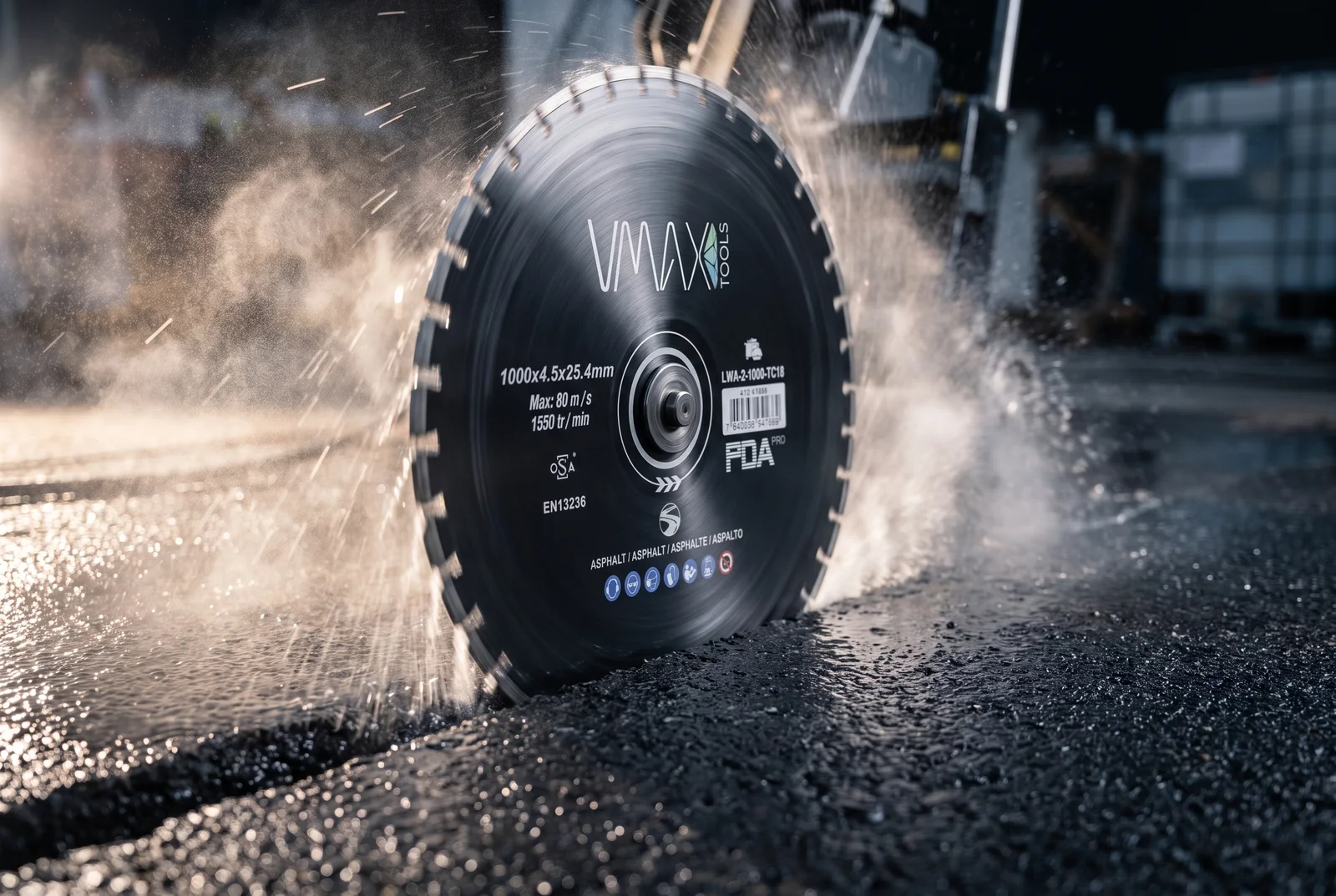
Asphalt, screed and fresh concrete are highly abrasive and wear down the bond quickly. Blades for these materials have a harder bond, often with undercut protection to prevent the blade core from wearing away.
All diamond cutting blades at a glance
In the shop, filter by machine, material and diameter to see at a glance which blade fits.
View diamond cutting bladesFrequently asked questions
Is there a diamond cutting blade for all materials?
Universal blades cut many materials reasonably well, but are rarely the best choice. If you often cut the same material, a specialized blade is worth it because it cuts faster and lasts longer.
Why has my blade suddenly stopped cutting?
The blade is often glazed because the bond is too hard for the material. Make a few cuts in a soft, abrasive material such as sandstone or aerated concrete to expose the diamonds again. If that doesn't help, the blade isn't suitable for the material.
Not sure which blade fits?
Tell us the material, machine and cutting depth. We'll recommend the right blade for you.
Request advice